
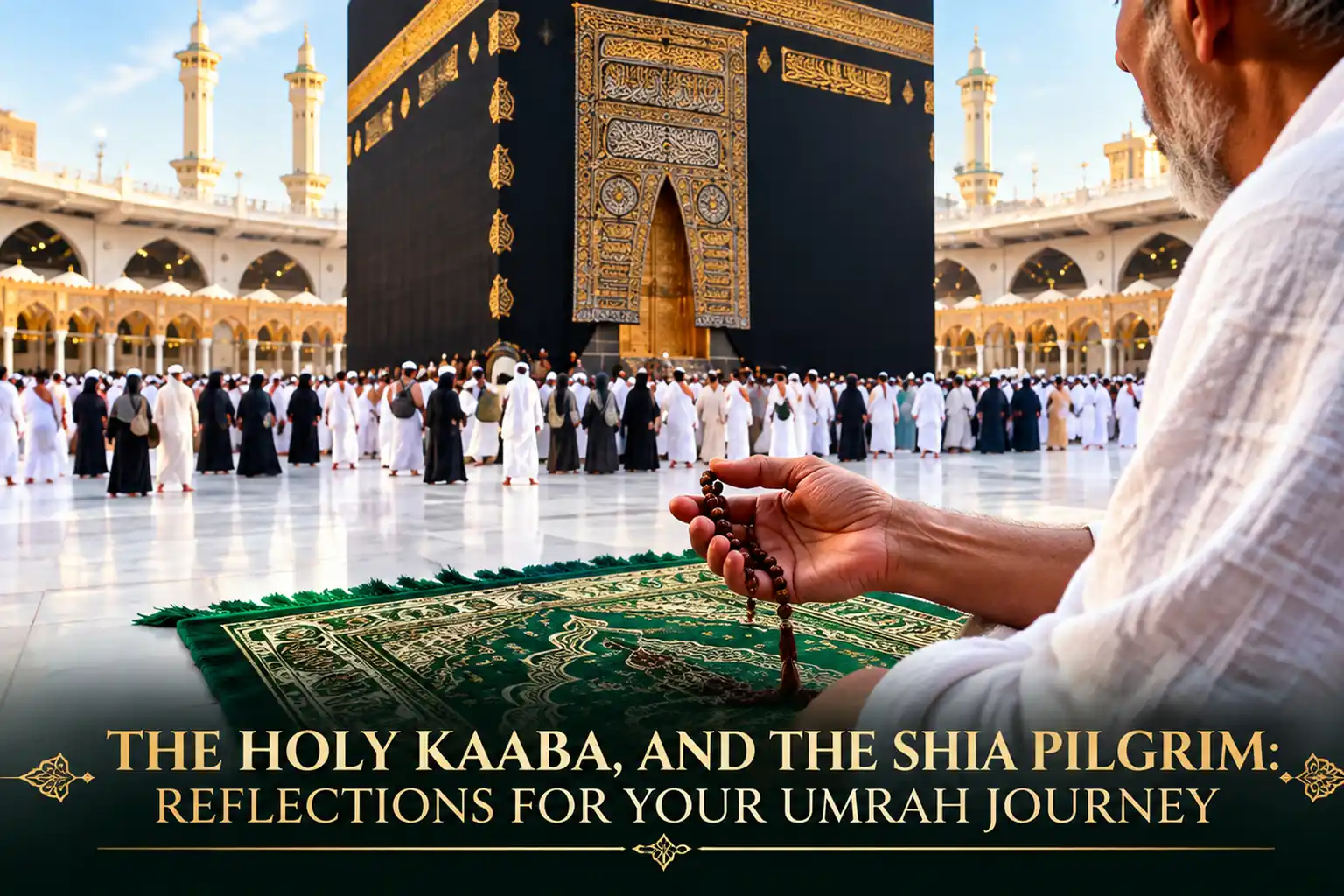
At the very heart of every Umrah stands the Holy Kaaba, the first house of worship raised for humankind. For a Shia Muslim, to circle it in Tawaf is to stand at a place woven through the entire history of the Prophets and the Ahlulbayt (AS). It was built by Prophet Ibrahim and his son Ismail (AS), and, by a distinction granted to no one else, it was within its very walls that Amir al-Mu’minin, Imam Ali (AS), was born. To understand these sacred connections before you travel is to perform Umrah not as a mere set of rituals, but as a journey of the heart, rich with meaning and love.
Once the longing to make this journey takes hold, arranging the trip becomes the next step. Many British Shia families look for Umrah Deals from UK that bring together the flights, visa, hotels and transport in a single affordable arrangement, so that the journey runs smoothly and the heart is left free for worship rather than logistics. Yet the deeper preparation is one of knowledge and reflection, understanding the history and significance of the sacred place you are about to visit, so that every moment there is filled with awareness.
The Kaaba, the first house of worship
The Holy Qur’an tells us that the Kaaba was the first house of worship appointed for mankind, a place full of blessing and guidance for all the worlds. It was raised up by Prophet Ibrahim and his son Ismail (AS), who, as they laid its foundations, prayed humbly that Allah would accept this work from them. To perform Tawaf around it today, then, is to join a chain of devotion that stretches back across the ages to the Prophets themselves. Every circuit is a reminder that the believer’s life revolves around the worship of Allah alone, just as the pilgrim’s steps revolve around His ancient House.
The birthplace of Imam Ali (AS)
For the Shia pilgrim in particular, the Kaaba holds a unique and cherished honour, for it is the birthplace of Imam Ali ibn Abi Talib (AS), the first of the Imams. It is well established in Shia tradition, and recorded in numerous historical sources, that his mother, Fatima bint Asad, entered the Holy Kaaba and gave birth to him within its blessed walls. This was a distinction granted to no other person, before or since, and it is counted among the great signs of the lofty rank of Imam Ali (AS). To stand before the Kaaba, aware of this, is to remember that the House of Allah was honoured as the birthplace of the one whom the Prophet (peace be upon him and his family) held so dear. For the believer, it adds a depth of love and reflection to every glance towards the Kaaba.
Umrah for the Shia pilgrim
Umrah al-mufradah, the single Umrah, may be performed at almost any time of the year, outside the specific days of Hajj. Its rites include entering the state of ihram at the appointed miqat, performing Tawaf around the Holy Kaaba, praying the salat of Tawaf, walking the sa’i between Safa and Marwah, performing taqsir, and completing tawaf al-nisa with its prayer. These acts are carried out in accordance with Fiqh Jaffari, and as with every act of worship, the precise rulings should be followed according to the guidance of your own marja’ al-taqlid. For this reason, learning the rites carefully before you travel is essential, so that you arrive prepared and perform each part with confidence and correctness.
Choosing your time, and the gentle autumn window
Because Umrah can be undertaken in almost any season, the choice of when to travel is largely one of comfort and circumstance. The autumn months, once the fierce heat of the Arabian summer has faded, are among the most pleasant of all for long hours of worship at the Haram. This is why many British pilgrims look to November Umrah Packages for a calmer, cooler and more affordable journey, well outside the great crowds of Ramadan and the school holidays. Whenever you decide to travel, it is wise to book well in advance, so that you secure a hotel close to the Haram and can reach the Kaaba easily for your daily prayers and Tawaf without a long walk in between.
Preparing your heart and your knowledge
The value of this journey grows immeasurably with understanding. Before you set out, study the history of the Kaaba and the lives of the Ahlulbayt (AS), and prepare the supplications and ziyarat you intend to recite. Families often teach their children the story of the birth of Imam Ali (AS) within the Kaaba, and the meaning of Tawaf and sa’i, so that the young ones travel with knowledge and wonder rather than confusion. This is where structured Islamic learning before the trip makes all the difference, turning what might be simple sightseeing into a profound act of devotion. A pilgrim who arrives understanding what they see experiences the Haram in a way that remains in the heart for a lifetime.
Practical guidance for the journey
A few practical matters deserve early attention. Make sure your passport is valid for at least six months, arrange the meningitis vaccination required for the visa, and obtain your Umrah permit through the official Nusuk app. Pack light, modest clothing and comfortable footwear, for there is a great deal of walking involved. Observe the dignity and etiquette of the sacred places at all times, keeping your heart present and your conduct gentle. For every question of ruling, from the rites of Umrah to matters of purity and prayer, return to the guidance of your marja’. And try to allow yourself enough days to visit the Haram many times, unhurried and at peace.
A journey to the House of Allah
For a Shia Muslim, a journey to the Holy Kaaba unites the worship of Allah with the love of His Prophet and the Ahlulbayt (AS). To perform Tawaf where Ibrahim and Ismail (AS) once prayed, and to stand before the House in which Imam Ali (AS) was born, is a blessing beyond words. Prepare well, learn deeply, choose a gentle season, and travel with a heart full of longing and humility. May Allah grant every believer who sets out the honour of standing before His House, and may He accept their Umrah and their worship.
Common questions about the Kaaba and Umrah
Was Imam Ali (AS) born inside the Kaaba?
Yes. It is well established in Shia tradition, and reported in numerous historical sources, that Imam Ali (AS) was born inside the Holy Kaaba to his mother, Fatima bint Asad. It is regarded as a unique honour granted to no one else.
Who built the Kaaba?
According to the Holy Qur’an, the Kaaba was raised by Prophet Ibrahim and his son Ismail (AS), who prayed that Allah would accept their work. It is described as the first house of worship appointed for mankind.
Can Shia Muslims perform Umrah?
Yes. Shia Muslims perform Umrah al-mufradah, which can be undertaken at almost any time of year. The rites are carried out according to Fiqh Jaffari and the rulings of one’s marja’ al-taqlid.
When is the best time to perform Umrah?
Umrah can be performed for most of the year, outside the days of Hajj. The autumn months, including November, are especially pleasant, with milder weather and thinner crowds that make worship at the Haram more comfortable.