
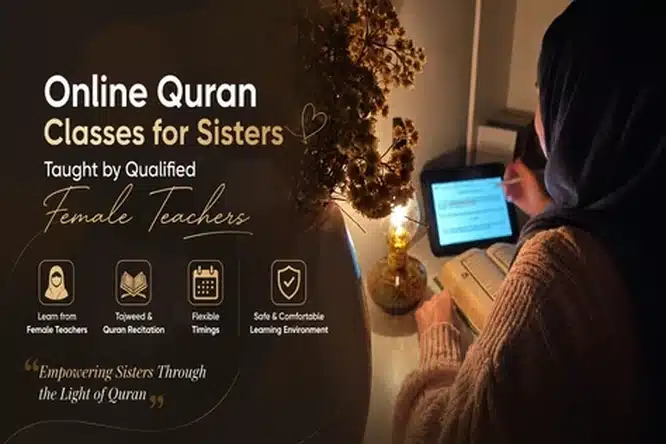
Finding the right teacher matters just as much as finding the time to learn. For many women, online Quran classes with a female teacher offer something traditional options often can’t: comfort, privacy, and a learning pace that fits real life. Whether you’re a beginner brushing up on Arabic letters or a working mother trying to memorize Surahs between errands, this guide walks you through what to expect, how to choose a qualified female Quran tutor, and what makes these classes genuinely effective.
Why Online Quran Classes for Sisters Are Growing in Popularity
More sisters than ever are choosing to study Quran online, and it’s not hard to see why. Between busy households, work schedules, and simply preferring a female-only learning environment, in-person classes aren’t always practical.
Comfort and Privacy at Home
Learning from home removes the need to travel, arrange childcare, or adjust to someone else’s schedule. Students can join a class from their living room, wearing what’s comfortable, without worrying about outside observers.
Flexible Scheduling for Busy Lives
Most online academies offer morning, afternoon, and evening slots. This flexibility means a sister balancing work, university, or parenting duties can still commit to consistent lessons without constant rescheduling.
What Makes a Female Quran Teacher Qualified
Not every online tutor is equally prepared to teach. A genuinely qualified female Quran teacher usually brings a combination of formal training and teaching experience.
Ijazah and Certification
An Ijazah is a certification confirming a teacher has mastered Quranic recitation with correct Tajweed and has been authorized to teach it onward. Ask any academy directly whether their teachers hold this credential.
Teaching Experience With Adult and Child Learners
Teaching a five-year-old to recognize Arabic letters requires a very different approach than guiding an adult sister toward fluent Tajweed. Experienced female teachers usually adjust their style based on the student’s age and starting level.
Core Subjects Covered in Online Quran Classes
A well-rounded program typically covers more than just reading. Here’s what sisters can generally expect to study:
- Noorani Qaida – for absolute beginners learning Arabic letters and basic pronunciation
- Quran Reading (Nazra) – reading the Quran fluently with correct pronunciation
- Tajweed Rules – the science of correct recitation, including makhraj (articulation points) and rules like Ikhfa and Idgham
- Hifz (Memorization) – structured memorization with regular revision plans
- Tafseer (Basic Understanding) – simple explanations of verse meanings for everyday reflection
Comparing Learning Paths Which One Fits You
| Learning Path | Best For | Typical Duration |
| Noorani Qaida | Complete beginners, new Muslims | 2–4 months |
| Nazra (Quran Reading) | Students who can read Arabic but need fluency | 6–12 months |
| Tajweed Course | Students wanting recitation accuracy | 3–6 months |
| Hifz Program | Students focused on memorization | Ongoing, multi-year |
This table is a general guide; actual timelines vary based on how often a student practices and prior familiarity with Arabic.
How to Choose the Right Online Academy
With so many platforms available, it helps to know what separates a solid program from a rushed one.
Ask About Trial Classes
A reputable academy will usually offer a free or low-cost trial lesson. This gives you a chance to see the teacher’s communication style and recitation quality before committing.
Check Class Size and Attention
One-on-one classes tend to allow more personalized correction of Tajweed mistakes compared to larger group sessions, where a teacher’s attention is naturally divided.
Look for Clear Progress Tracking
Ask whether the academy provides a syllabus or progress report. Structured tracking helps both the student and teacher stay accountable over weeks and months.
Tips for Getting the Most Out of Online Quran Learning
- Set a fixed weekly schedule rather than “whenever there’s time”
- Use a stable internet connection and a quiet space during lessons
- Review the previous lesson for five minutes before each new class
- Keep a simple notebook to track new rules or verses learned
- Communicate openly with your teacher about pace — faster or slower
FAQs
Are online Quran classes as effective as in-person learning?
Yes, when taught by a qualified teacher using video calls with screen sharing and interactive correction. Many students actually find one-on-one online sessions more focused than crowded in-person classes, since the teacher’s attention isn’t divided among many students.
How long does it take to learn Tajweed rules properly?
Most students grasp core Tajweed rules within three to six months of regular practice, though fluency and confident application typically take longer. Consistency matters more than speed — daily short practice sessions usually outperform infrequent long ones.
Can beginners with no Arabic background join these classes?
Absolutely. Most academies start complete beginners with Noorani Qaida, which introduces Arabic letters, sounds, and basic joining rules before moving into actual Quran reading. No prior Arabic knowledge is required to begin.
What qualifications should a female Quran teacher have?
Look for an Ijazah in recitation, prior teaching experience, and ideally a background in a recognized Quranic institution. It also helps to ask for a trial class to assess teaching clarity and patience firsthand.
Is it possible to learn Quran online with a flexible schedule?
Yes, most online academies offer multiple time slots across morning, afternoon, and evening, often across different time zones. This flexibility allows sisters with work, studies, or family responsibilities to maintain consistent weekly lessons.