

Shia Muslim beliefs center on a profound commitment to daily prayer, fasting, and spiritual devotion rooted in the Quran and the teachings of the Prophet Muhammad (PBUH) and his family, the Ahlul Bayt. These practices are not mere rituals; they are pathways to closeness with Allah, moral discipline, and communal identity that have shaped Shia Islam for over fourteen centuries. A Shia Online Quran Academy helps students deepen their understanding of these beliefs by providing structured Quran education, Islamic studies, and guidance based on the teachings of the Ahlul Bayt in a convenient online learning environment.
What Are the Core Shia Muslim Beliefs
To understand how Shia Muslims practice prayer and fasting, it helps to first understand what they believe. At the foundation of shia islam beliefs is a theological framework known as Usul al-Din the roots of religion. These are not denominational preferences; they are considered essential articles of faith.
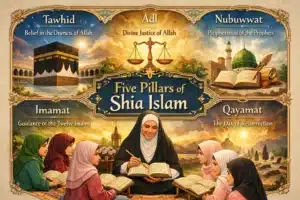
The Five Roots of Shia Faith (Usul al-Din)
- Tawhid — Oneness of God
- Adl — Divine Justice
- Nubuwwah — Prophethood
- Imamate — Leadership of the twelve Imams
- Qiyamah — Day of Judgment
One of the most distinctive shia beliefs is Adl the justice of God. Shia theology holds that Allah is inherently just and never acts in opposition to justice. This belief shapes how Shia Muslims understand suffering, free will, and moral accountability.
The concept of Imamate is another pillar that separates shia islam beliefs from Sunni tradition. Shia Muslims believe that after the Prophet, divine guidance continued through twelve Imams from his family all descendants of Imam Ali ibn Abi Talib. These Imams are considered spiritually infallible guides whose interpretations of Islamic law carry divine authority.
Daily Prayer in Shia Practice Structure, Intention, and Meaning
Prayer, or Salah, is one of the most visible expressions of shia beliefs in daily life. Shia Muslims perform five obligatory prayers each day, but they are often combined into three prayer times Fajr (dawn), Dhuhr-Asr (midday through afternoon), and Maghrib-Isha (evening through night). This combination is permitted under Shia jurisprudence and is both valid and practical.
Key Features of Shia Prayer
- Prostration (Sujud) is performed on a clay tablet called a Turbah, often made from the soil of Karbala.
- The phrase “Hayya ala Khayril Amal” (Hasten to the best of deeds) is included in the Adhan.
- Hands are held at the sides during standing portions of prayer, rather than folded across the chest.
- Niyyah intention is treated as a deeply conscious declaration before each prayer.
These differences trace back to narrations from the Ahlul Bayt and reflect a commitment to authentic prophetic practice as transmitted through the Imams. Shia islamic beliefs are shaped by a coherent theological and historical framework, not by deviation.
Fasting, Ramadan, and the Deeper Meaning of Shia Aqaid
Fasting in Ramadan is obligatory for all Muslims, including Shia. The Shia approach to fasting is informed by Shia Aqaid the doctrinal beliefs that guide spiritual practice. Shia Aqaid teaches that fasting is not simply abstaining from food and drink. It is a comprehensive spiritual discipline that includes restraining the tongue from falsehood, the eyes from prohibited sights, and the heart from distraction.
Special Nights of Worship in Ramadan
The last ten nights of Ramadan hold special importance in Shia practice. The nights of the 19th, 21st, and 23rd are all observed as possible Laylat al-Qadr the Night of Power.
- Staying awake in prayer and Quranic recitation throughout all three nights is considered highly recommended.
- Special supplications from the Sahifa al-Sajjadiyya the prayer collection of Imam Zayn al-Abidin are commonly recited.
- Acts of charity and community gathering amplify the spiritual merit of these nights.
Beyond Ramadan, Shia Aqaid also encourages voluntary fasting on significant dates such as the birth anniversaries of the Imams and the day of Arafat. These practices connect ordinary life to sacred history.
Shia Spiritual Devotion Ziyarat, Dua, and the Role of the Ahlul Bayt
Beyond formal prayer and fasting, shia beliefs encompass a rich culture of spiritual devotion. Ziyarat pilgrimage to the shrines of the Imams is considered a spiritually meritorious act. It is not worship of the deceased; it is a way of honoring those who exemplified the highest levels of faith and renewing one’s connection to prophetic guidance.
Dua The Language of the Heart
Shia tradition has preserved an extraordinary body of supplications, or Du’a, transmitted through the Imams. The most celebrated collection is the Sahifa al-Sajjadiyya by the fourth Imam, which covers supplications for every dimension of human experience from gratitude and repentance to personal hardship and social justice.
This tradition of Du’a is one of the most meaningful gifts Shia Aqaid offers to spiritual seekers. It teaches that every moment from waking in the morning to facing difficulty can become an act of worship if accompanied by sincere remembrance of Allah.
Learning Shia Islam Beliefs The Role of Quranic Education Today
Understanding shia islam beliefs fully requires proper education. The Quran is the foundation of all Islamic practice, and Shia jurisprudence places enormous emphasis on Quranic recitation with correct Tajweed. Beyond recitation, learners are encouraged to study Tafsir through the lens of the Ahlul Bayt’s interpretations.
For families who want structured, authentic learning based on Fiqh Jaffari, a shia online quran academy can offer a practical and accessible path. Online platforms now connect students with qualified Shia scholars who can guide Quranic studies, explain shia beliefs in depth, and help develop a genuine spiritual practice.
When choosing where to learn, look for teachers who explain not just how to recite, but why each practice matters within the larger framework of Shia Aqaid. That combination of practical skill and theological grounding is what transforms religious education into genuine spiritual growth.
If you are ready to deepen your connection to your faith, exploring a trusted shia online quran academy is a natural and worthwhile next step.
FAQs
What Are the Core Beliefs of Shia Islam?
The core beliefs of Shia Islam center on the oneness of Allah, the prophethood of Prophet Muhammad (PBUH), divine justice, the leadership of the Imams, and belief in the Day of Judgment. Shia Muslims follow the teachings of the Prophet Muhammad (PBUH) and his family, known as Ahlul Bayt, as a source of religious guidance.
Who Is Considered the First Shia Muslim in Islamic History?
Many Shia scholars consider Imam Ali ibn Abi Talib, the cousin and son-in-law of Prophet Muhammad (PBUH), as the first Imam and the central figure of the Shia tradition. The term “Shia” refers to those who supported Imam Ali’s leadership after the Prophet’s passing.
What Are the Seven Pillars of Shia Islam?
The Seven Pillars of Shia Islam include prayer (Salah), fasting (Sawm), pilgrimage (Hajj), charity (Zakat), Khums, striving in the way of Allah (Jihad), and encouraging good while discouraging wrongdoing. These practices help guide a Muslim’s spiritual and moral life.
What Are the Five Fundamental Beliefs of Shia Muslims?
The five fundamental beliefs, known as Usul al-Din, are Tawhid (belief in one God), Adalah (divine justice), Nubuwwah (prophethood), Imamah (leadership of the Imams), and Qiyamah (the Day of Resurrection). These principles form the foundation of Shia faith and theology.
What Religious Practices and Guidelines Do Shia Muslims Follow?
Shia Muslims follow Islamic teachings based on the Quran and the guidance of Prophet Muhammad (PBUH) and his family. They observe daily prayers, fasting during Ramadan, charitable giving, and ethical conduct while seeking to live according to Islamic values and principles.